Truckload Rates Are Rising in 2026 – So Why Isn't Your Profit?
If you've been booking loads this fall, you've probably noticed something that hasn't happened in a long time: rates are actually going up. After years of a brutal freight recession, that sounds like great news. But talk to any owner-operator or small fleet owner and you'll hear the same thing: "Then why doesn't it feel like I'm making more money?"
That's the real story of the 2026 freight market. Rates are rising, but so is almost everything it costs to keep a truck moving. Let's look at what's happening, and more importantly, what you can do about it.
Rates Are Climbing, But Not Because Freight Is Booming
The numbers on the revenue side look strong. According to the latest TD Cowen/AFS Freight Index, truckload rates are projected to reach 23.4% above their January 2018 baseline in Q4 2026. That is a 14.7% jump year over year and the highest level since early 2022, even though freight demand is still described as sluggish.
So where is the increase coming from? FreightWaves put it simply: rates are rising because "trucks are leaving the market, not because freight is booming." (FreightWaves)
The capacity data backs that up. Tractors in new for-hire fleets dropped to 19,520 in August, while the SONAR Truckload Rejection Index stayed near 14%, roughly three times its 2023–2025 range (FreightWaves). In past cycles, high rejection rates pulled new trucks into the market within a few quarters. This time, that isn't happening.
And the market isn't as stable as the headlines suggest. As the October State of the Industry report notes, "Freight demand remains steady but the market is still fragile." (FreightWaves / Ryder)
The Other Side of the Ledger: Costs Are Rising Even Faster
Here's where the good news gets complicated.
Diesel. In early October, the FreightWaves diesel truck stop price hit $6.39 per gallon. Over the past month, diesel rose almost 9.9%, while all-in spot rates rose only about 4.1% (FreightWaves). In other words, fuel is eating a big part of the rate increase before it ever reaches your bank account.
Parts and maintenance. The new FinditParts Heavy-Duty Price Index shows that heavy-duty parts prices have risen 5.7% since January 2024, with some categories up close to 13%. Even with prices flattening in recent months, "fleets and repair shops continue to face elevated replacement parts costs." (Trucknews.com)
The gap that still hasn't closed. Based on ATRI's 2026 operational cost data, FreightWaves estimates that a typical dry van truck at today's benchmark rates still needs roughly 14% more revenue just to cover its overhead (FreightWaves).
Put all of this together and you get the picture many carriers are living right now: more revenue on paper, about the same (or less) money at the end of the month.
What This Means for Small and Mid-Sized Carriers
Large fleets have pricing teams, fuel programs and analysts watching every lane. Most small carriers don't. They run on gut feeling, weekly bank balances and a spreadsheet that's usually a few weeks behind.
That worked (barely) when rates and costs moved slowly. It doesn't work in a market like this one, where diesel can jump almost 10% in a month and a single bad lane with heavy deadhead can wipe out the profit from three good loads. Higher gross revenue can easily hide a shrinking margin, and by the time you notice, the quarter is over.
The carriers who come out of this cycle stronger won't necessarily be the ones hauling the most freight. They'll be the ones who know exactly what every load earns them.
5 Practical Steps to Protect Your Margin This Quarter
- Recalculate your real cost per mile, every month. Add up your fixed costs (truck and trailer payments, insurance, permits, software) and your variable costs (fuel, maintenance, tires, driver pay, tolls), then divide by total miles, including empty miles. If your number is from last spring, it's already wrong.
- Measure profit per load, not just revenue per month. A $3,000 load with 250 empty miles and a long detention can be worse than a $2,200 load with a backhaul ready. Look at each load's net result after fuel, driver pay and deadhead.
- Revisit your fuel surcharge and contract rates. If your contracted lanes were priced when diesel was cheaper, you're subsidizing your customers. With contract rates moving up across the market, this is the right moment to have that conversation with shippers and brokers.
- Track maintenance and parts costs per truck. With parts prices still elevated, knowing which units cost you the most helps you decide when to repair, when to replace and how to budget for next year.
- Get paid faster. Higher fuel costs mean you're spending more cash upfront on every load. Invoicing the same day the POD comes in, or using factoring, keeps your cash flow from becoming the next problem.
How ezLoads TMS Helps You See Your Real Numbers
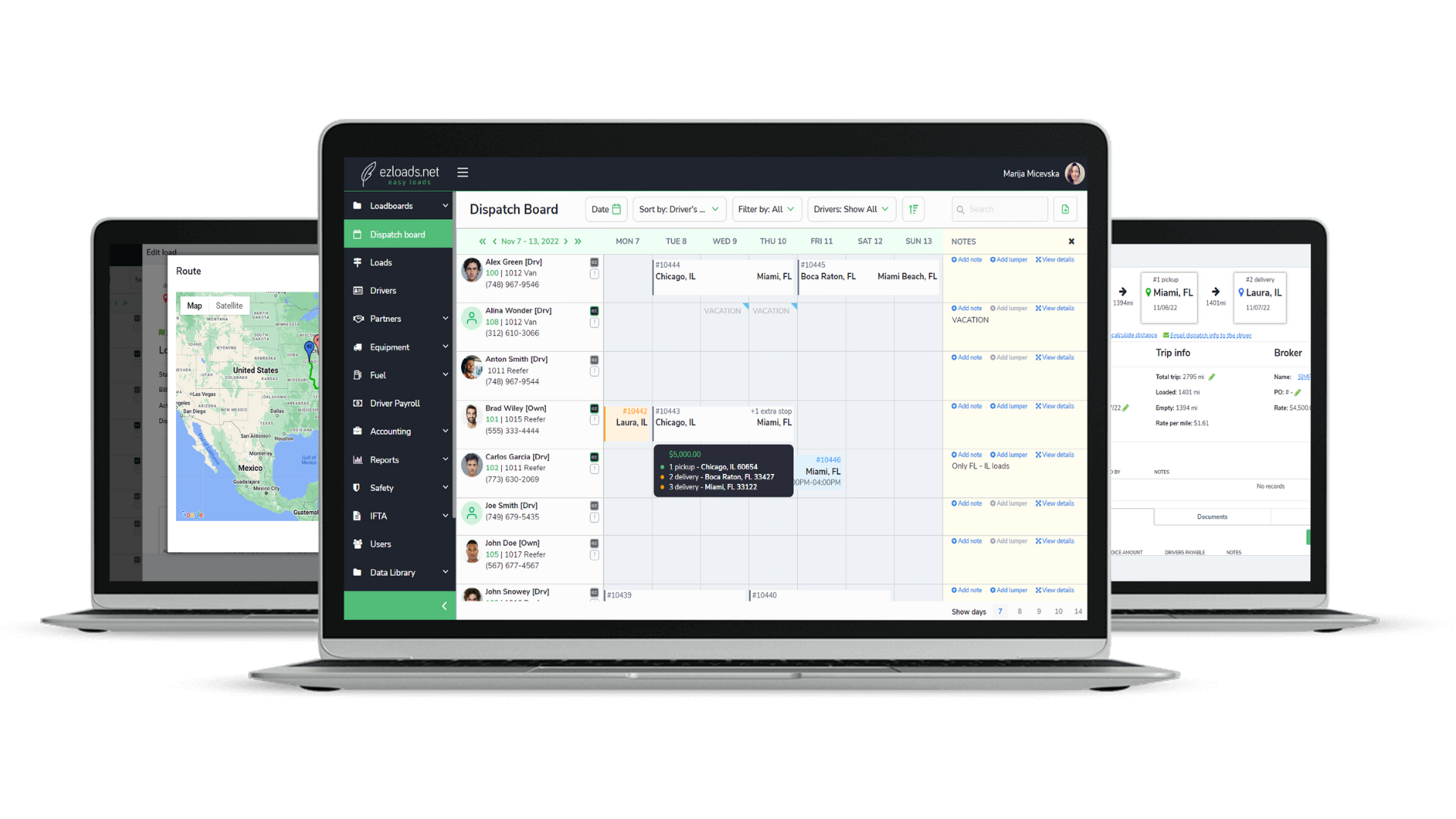
All five steps have one thing in common: they depend on having accurate data in one place. That's exactly what ezLoads TMS was built for.
- Every load in one system. The AI Parser auto-fills loads straight from rate confirmations in seconds, so your revenue data is complete and accurate from the start.
- Fuel and driver pay connected to the load. Automated fuel data import, advances, deductions and driver settlements all live on one screen.
- Real-time visibility. ELD integration brings live truck locations directly into your TMS dashboard.
- Faster cash flow. Drivers submit PODs from the ezLoads Driver App, and you can invoice and submit factoring schedules directly from the platform, with 65+ factoring integrations.
When loads, fuel, driver pay and invoices are all connected, figuring out what each load actually earned stops being guesswork.
The Bottom Line
The 2026 freight market is giving carriers something they haven't had in years: pricing power. But higher rates only matter if they turn into higher profit. In a market where fuel, parts and operating costs are climbing just as fast, the carriers who win will be the ones who know their numbers, load by load, week by week.
Ready to see what your loads are really earning?
Request access to ezLoads or call or text us at (312) 823-5835.
Sources:
- Truckload rates to hit highest levels since 2022 as capacity tightens: AFS – Trucknews.com
- Why Trucking Rates Are Rising Without More Freight – FreightWaves
- Is Trucking Capacity Coming Back? – FreightWaves
- State of the Industry – October 2026 – FreightWaves
- Truckload Spot Rates Keep Rising, But Demand Isn't… Why? – FreightWaves
- Heavy-duty truck parts prices climb 5.7% since early 2024 – Trucknews.com